
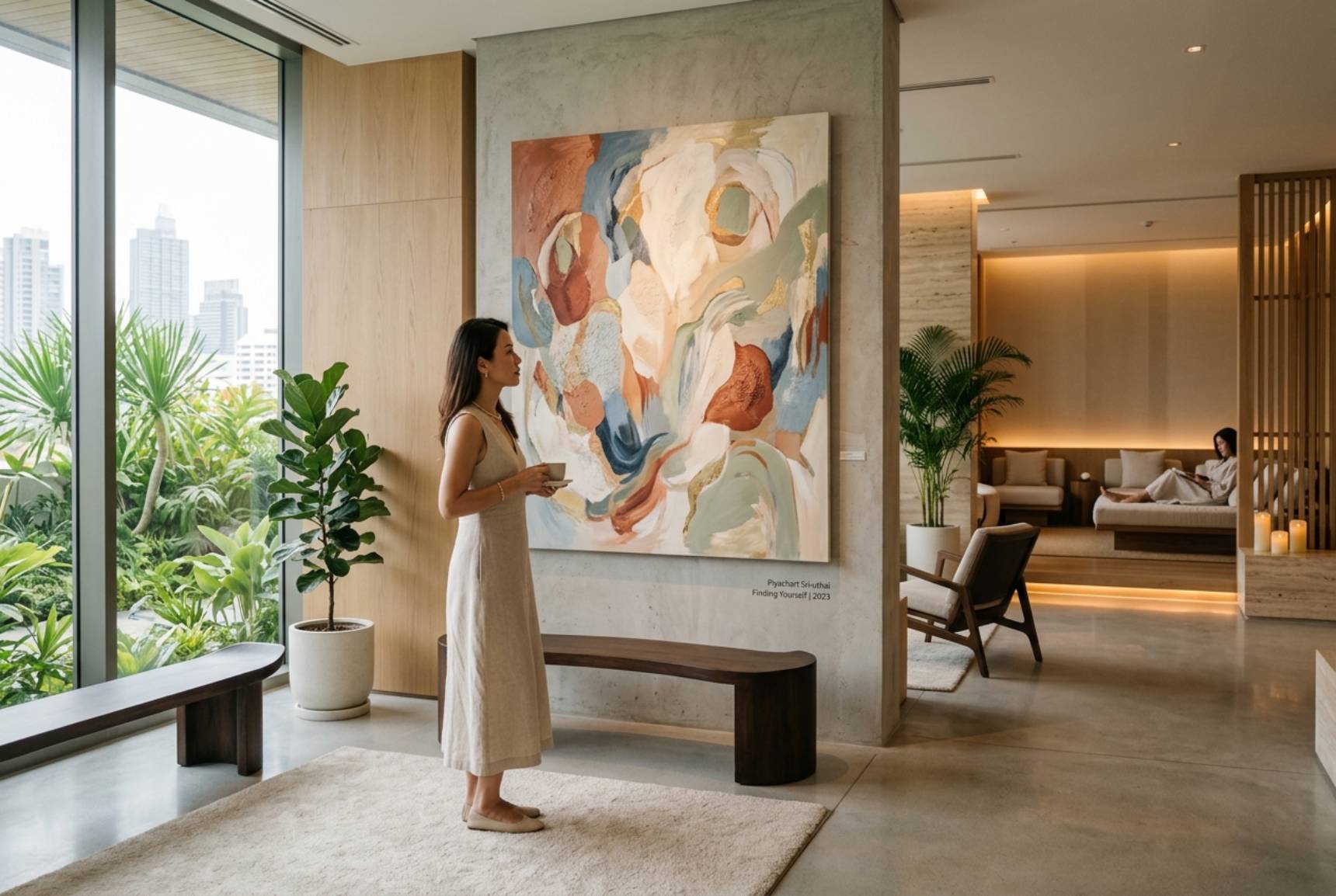
Wellness is not a one-size-fits-all experience. For some people, it means finding stillness in a quiet room. For others, it means exploring new ideas, reconnecting with their emotions, or discovering beauty in unexpected places. Just as every individual follows a different path toward well-being, art offers countless ways to understand ourselves and experience the world around us.
Abstract art captures this connection in a particularly compelling way. Free from the obligation to represent recognizable objects or tell a straightforward story, abstract spaces invite us to look beyond the obvious. Colors, textures, shapes, and movement become tools for personal interpretation, creating an experience that is as unique as the person standing before the artwork.
At Art Bangkok, the relationship between art and wellness opens the door to a more personal kind of escape—one where creative exploration meets relaxation, and where an artistic environment can become an invitation to slow down, reflect, and reconnect with yourself.
Why Wellness Begins With Understanding Yourself
Modern life often encourages us to measure well-being through external expectations. We follow routines, pursue goals, and search for solutions that promise to make us feel more balanced. Yet genuine wellness begins with a more personal question: What do I need right now?
The answer changes depending on our circumstances, emotions, and stage of life. Sometimes, we need movement and stimulation. At other times, we need silence, comfort, and the freedom to do nothing at all.
Art can provide a space in which to explore these changing needs without pressure. An abstract painting does not demand a particular response. It allows us to pause, notice our reactions, and recognize the feelings that arise naturally.
A composition filled with energetic lines and vivid colors might feel inspiring to one visitor and overwhelming to another. A minimalist arrangement of muted tones might suggest peace to someone while reminding another person of solitude. Neither interpretation is incorrect. The experience belongs to the individual.
This freedom is one of the most valuable connections between abstract art and personal wellness. It reminds us that our emotional experiences do not need to fit a universal formula. We can approach ourselves with the same openness and curiosity that we bring to a work of art.
Abstract Art as a Mirror of Personal Emotion
Unlike realistic imagery, abstract art often leaves room for ambiguity. It may communicate through color relationships, contrasting textures, unexpected proportions, or gestures that suggest movement without defining its destination.
This openness gives viewers the opportunity to participate in the meaning of the artwork. Instead of simply receiving a predetermined message, they bring their own memories, associations, and emotions into the encounter.
Consider a painting dominated by deep blue tones. One person might associate it with the quiet of the ocean, while another might see the mystery of the night sky. A burst of orange could evoke warmth, energy, or a memory of a place visited long ago.
These responses reveal how differently people experience the same visual environment. They also encourage us to become more attentive to our inner lives.
When you spend time with abstract art, try asking yourself a few simple questions. Which colors attract your attention first? Does the composition make you feel calm, curious, energized, or uncertain? Are there particular shapes or textures that hold your interest? What memories or associations appear without being deliberately summoned?
There is no need to analyze every answer. Sometimes, simply noticing your reaction is enough.
In this sense, abstract art becomes less about finding the correct interpretation and more about discovering your own. The artwork provides the starting point, while your experience gives the encounter its personal meaning.
Creating Space for Reflection Through Visual Experiences
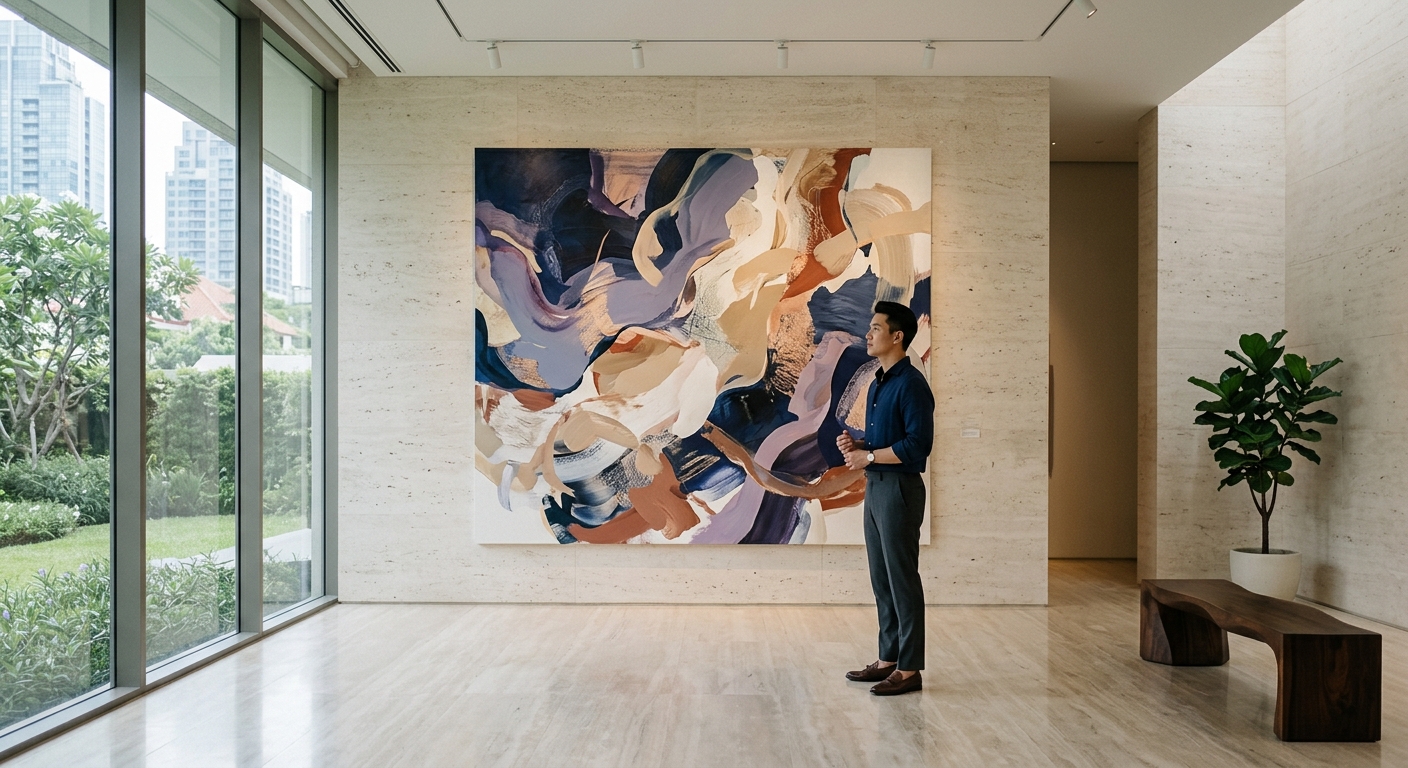
Reflection does not always require complete silence or a formal meditation practice. Sometimes, it begins with a small change in attention.
Walking through an art exhibition offers an opportunity to step outside familiar routines. Instead of moving quickly from one task to another, visitors can slow down, observe details, and spend time with a single image or installation.
Abstract spaces can be particularly suited to this kind of exploration because they do not always provide an immediate answer. Their meaning may emerge gradually as viewers notice new details or reconsider their initial impressions.
A painting that first appears chaotic may reveal an underlying rhythm. A seemingly simple arrangement of shapes may become more engaging when viewed from a different distance. A contrast between light and dark may suggest balance rather than conflict.
This process encourages patience and attentive observation. It also offers a reminder that understanding does not always happen instantly.
For a more reflective visit, choose one artwork that attracts your attention and remain with it for a few minutes. Notice its visual details before trying to explain what it means. Observe how your interpretation changes as you continue looking.
The purpose is not to achieve a particular emotional outcome. It is to create a moment in which attention can settle naturally, allowing you to experience the artwork without rushing toward the next destination.
Color, Texture, and the Atmosphere of Wellness
The visual elements of abstract art can influence the atmosphere of a space and shape how people experience it. Although no color or composition produces the same response in everyone, certain visual qualities may suggest different moods or associations.
Soft neutrals, gentle gradients, and spacious compositions may evoke simplicity and openness. Deep blues and greens can remind viewers of water, forests, or expansive landscapes. Bold reds, vivid yellows, and energetic brushstrokes may suggest movement, intensity, or creative possibility.
Texture introduces another dimension. Rough surfaces can create a sense of depth and physical presence, while smooth transitions and delicate layers may feel subtle and contemplative. Repetition can suggest rhythm, whereas irregular forms may invite exploration and surprise.
The relationship between these elements matters as much as the individual details. A vibrant color can feel balanced when surrounded by open space, while a restrained palette can become dramatic through sharp contrasts and unexpected forms.
In wellness-oriented environments, these visual choices can contribute to the character of the surroundings. Art may help create a setting that feels welcoming, stimulating, intimate, or contemplative, depending on its arrangement and relationship with the architecture.
At Art Bangkok, this connection between visual creativity and a serene retreat offers an opportunity to experience art as more than decoration. The surrounding environment can become part of the experience, encouraging visitors to notice how space, atmosphere, and personal perception work together.
The Relationship Between Art and Relaxation
Relaxation is often associated with stepping away from screens, reducing noise, or taking time out of a busy schedule. Creative experiences can offer another way to change our relationship with attention.
Looking at art invites us to engage with something that does not necessarily demand a practical response. We can observe without purchasing, comparing, solving, or producing. We can simply spend time with what is in front of us.
For some people, this can feel refreshing. The absence of a single correct interpretation creates room for curiosity, while the visual experience offers a gentle alternative to the constant stream of information that characterizes everyday life.
When combined with a spa-inspired setting, the experience can become part of a broader personal ritual. A visitor might begin by exploring an exhibition, continue with a quiet pause, and then enjoy a relaxing treatment designed to support comfort and a sense of escape.
The two experiences serve different purposes. Art provides a space for visual discovery and interpretation, while spa treatments offer an opportunity to focus on physical comfort and relaxation. Together, they can create a more varied and personal retreat.
It is important to remember that viewing art is not a substitute for professional mental health care, and its effects vary from person to person. Its value lies in the opportunity it creates: a chance to pause, explore, and enjoy an experience without demanding that it solve every problem.
Designing Your Own Personal Art and Wellness Ritual
A meaningful wellness ritual does not need to be elaborate. It can begin with a few intentional choices that make space for attention, enjoyment, and self-reflection.
Start by deciding what kind of experience would feel most welcome. If your week has been busy, you might prefer a quiet environment with subtle colors and spacious compositions. If you feel creatively stuck, an exhibition featuring expressive forms and unexpected contrasts may offer a fresh perspective.
During your visit, allow yourself to move at a comfortable pace. You do not need to see every artwork or understand every artistic decision. Follow the pieces that attract you, and give yourself permission to move on when your attention shifts.
You can also make the experience more personal by keeping a small journal. Write down three words that describe how a particular artwork makes you feel. Sketch a shape that catches your eye, or record a color combination that you would like to remember.
Afterward, take a few moments to notice what you appreciated most. Perhaps you enjoyed the atmosphere, discovered a new artistic preference, or simply valued the chance to spend time without a demanding schedule.
If a spa experience is part of your visit, consider how you would like to transition between the two activities. A few quiet minutes before a treatment can help you leave behind the pace of the day and settle into the experience. Afterward, you may enjoy revisiting an artwork or reflecting on the atmosphere that stayed with you.
The goal is not to follow a perfect routine. It is to create an experience that responds to your own preferences and needs.
Letting Go of the Need to Understand Everything
One of the most liberating aspects of abstract art is the freedom to appreciate something without fully understanding it.
We often approach unfamiliar experiences with the expectation that we should quickly identify their meaning. We want explanations, categories, and conclusions. Yet some experiences become more rewarding when we allow uncertainty to remain.
Abstract art makes this especially clear. A work may not depict a recognizable subject, and the artist's intention may not be immediately apparent. Instead of treating this as a barrier, viewers can see it as an invitation to explore.
The same principle can be useful when thinking about personal wellness. We do not always know exactly why we feel tired, inspired, unsettled, or hopeful. We may not have an immediate answer to what we need next.
Giving ourselves permission to observe without judgment can be a gentle starting point. Rather than forcing an explanation, we can acknowledge our current experience and remain open to what emerges.
An abstract artwork can serve as a reminder that uncertainty is not necessarily a problem to eliminate. Sometimes, it is simply part of the process of discovering something new.
8. Art as a Personal Journey Rather Than a Destination
An exhibition can offer a different experience every time you visit. Your response to a particular work may change with your mood, your memories, or the experiences you have accumulated since seeing it previously.
A painting that once seemed distant might later feel familiar. A composition that initially appeared confusing may become more interesting after you have encountered similar artistic approaches. Even the same artwork can reveal different details when you spend more time with it.
This changing relationship reflects the personal nature of art. The experience is not limited to the object itself; it also develops through the relationship between the artwork and the viewer.
Wellness can be understood in a similar way. Rather than treating it as a permanent state that must be achieved, we can view it as an ongoing process of adjustment, attention, and care.
Some days call for energy and exploration. Others require rest, connection, or a little more room to think. Recognizing these differences allows us to choose experiences that feel appropriate to the moment.
Art can be one part of that journey. It offers a way to encounter new perspectives, revisit familiar emotions, and appreciate the value of individual interpretation.
Bringing Creative Inspiration Into Everyday Spaces
The relationship between art and well-being does not have to end when an exhibition visit is over. Small creative choices can help bring a sense of personal expression into everyday environments.
Consider the artwork you choose for your home or workspace. Rather than selecting a piece solely because it matches a particular trend, think about how you respond to it. Does it make the room feel more inviting? Does its composition encourage curiosity? Does it remind you of a place, person, or experience that matters to you?
You can also experiment with the arrangement of your surroundings. A carefully chosen print, a sculptural object, a natural material, or an interesting contrast between textures can change the character of a familiar space.
Creating your own abstract artwork is another possibility. You do not need professional training to experiment with color, line, and shape. A simple drawing or painting can become a way to explore visual ideas without worrying about technical perfection.
The emphasis should remain on personal enjoyment rather than performance. Creative activities are not competitions, and their value does not depend on producing something impressive.
By choosing visual elements that resonate with you, you can make everyday spaces feel more personal and create small opportunities to reconnect with your preferences.
Discovering a More Personal Kind of Retreat at Art Bangkok
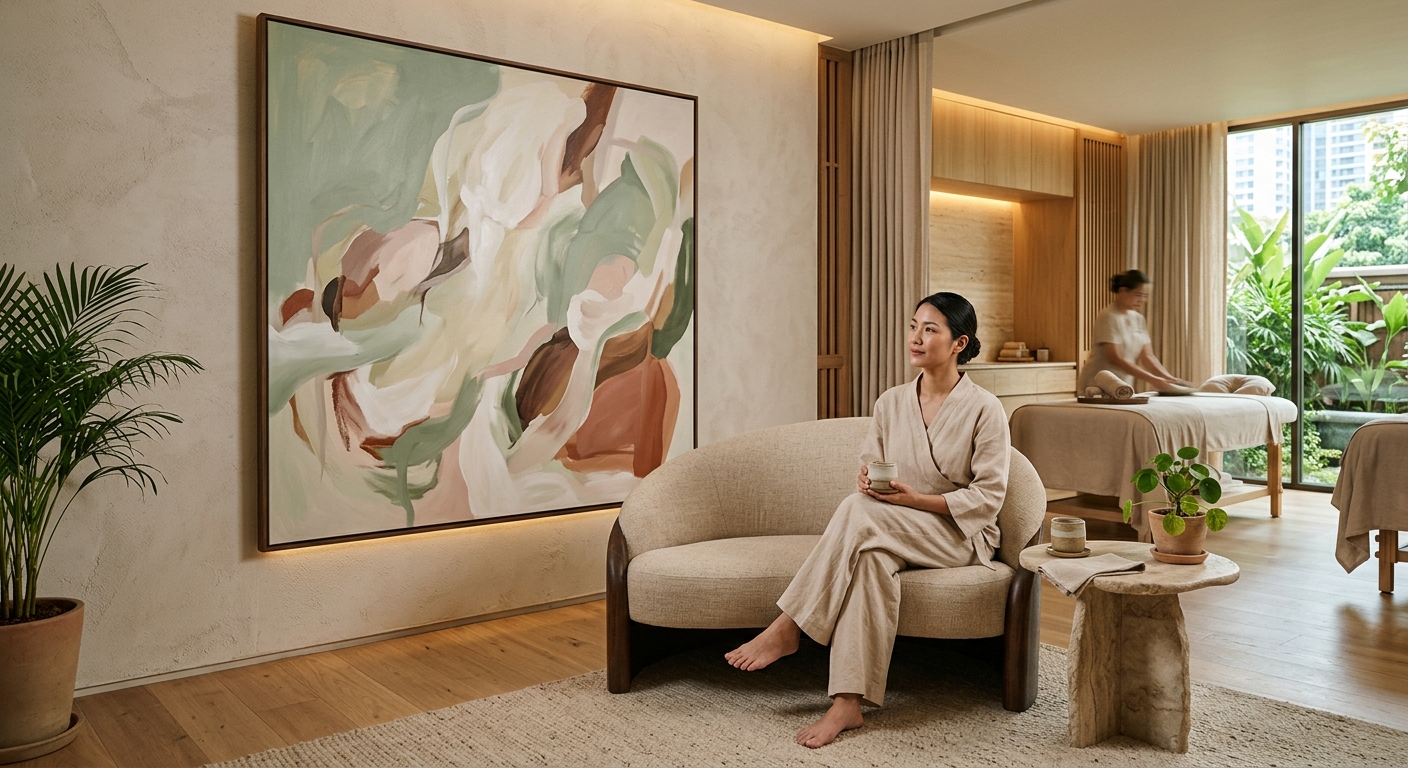
The most memorable wellness experiences are often those that leave room for individuality. Rather than prescribing exactly how visitors should feel, an environment can invite them to discover what they enjoy, what captures their attention, and what helps them feel comfortable.
Art Bangkok brings together the idea of artistic discovery and the atmosphere of a serene spa retreat. This combination offers a distinctive way to spend time away from familiar routines, exploring visual creativity while making room for relaxation.
An exhibition can stimulate curiosity and encourage personal interpretation. A thoughtfully designed setting can make the experience feel welcoming and unhurried. A spa-inspired escape can add another dimension, allowing visitors to devote time to their own comfort and enjoyment.
Whether you are drawn to bold abstract compositions, subtle color palettes, expressive textures, or the simple pleasure of being surrounded by art, the experience begins with your own response.
You do not need an art history background to appreciate an exhibition, and you do not need a complicated wellness routine to enjoy a moment of calm. You only need the willingness to slow down, pay attention, and discover what feels meaningful to you.
At Art Bangkok, art becomes an invitation rather than an instruction. It encourages you to explore without comparison, reflect without pressure, and recognize that personal well-being can take many different forms.
Conclusion: Your Experience, Your Interpretation, Your Well-Being
Wellness is personal because every individual brings a different combination of emotions, experiences, preferences, and aspirations to the world. Art is personal for the same reason. It creates opportunities for connection without requiring everyone to reach the same conclusion.
Abstract spaces make this relationship especially visible. Through color, shape, texture, and open interpretation, they invite us to discover our own responses and appreciate the diversity of human experience.
When art and relaxation come together in a welcoming environment, they can offer more than a change of scenery. They can create space for curiosity, reflection, and the simple pleasure of experiencing something at your own pace.
Explore the connection between creativity and calm at Art Bangkok, and discover how an encounter with abstract art can become a meaningful part of your own personal retreat.
Because wellness is not about finding one perfect way to feel better. It is about discovering what resonates with you—and allowing yourself the freedom to experience it in your own way.