
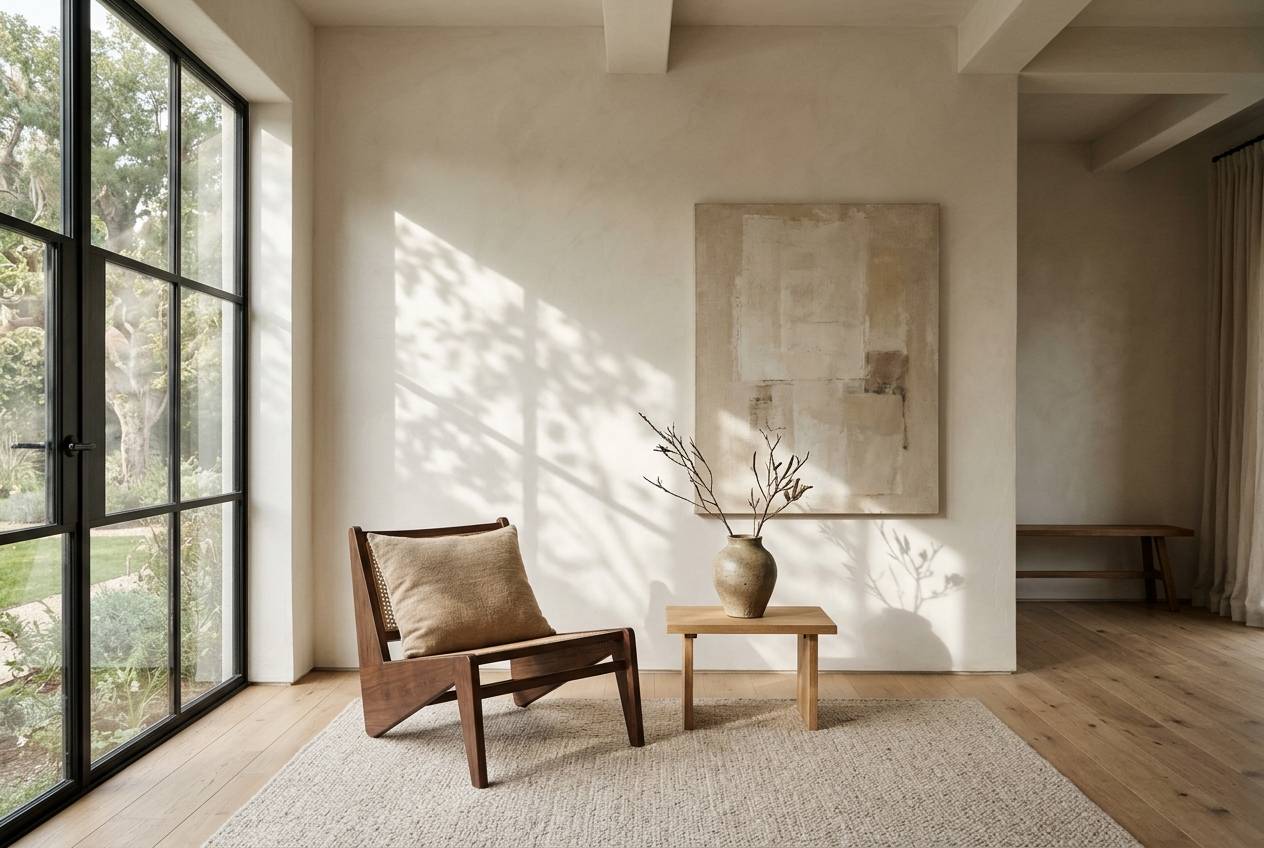
In a world filled with images, products, and endless visual stimulation, the idea of an interior that offers silence has become increasingly compelling. A room does not need to be empty to feel peaceful, nor does it need to be filled with beautiful things to feel complete. Sometimes, the most expressive spaces are those in which every object has a reason to exist.
Furnishing silence is the art of creating an environment where objects, materials, light, and empty space coexist without competing for attention. It is a thoughtful approach to interior design that considers not only what belongs in a room, but also what should be left out.
A sculptural chair, a handmade ceramic vessel, a carefully chosen painting, or a single branch arranged in a simple vase can transform a space. Their presence becomes meaningful because they are given room to breathe. Rather than filling every surface, the designer allows individual objects to reveal their character gradually.
This philosophy invites a different way of thinking about interiors. Instead of asking what else a room needs, we begin to ask what truly deserves to remain.
When Less Becomes More Than Minimalism
Minimalism is often associated with clean lines, neutral colours, and an absence of decoration. Yet furnishing silence goes beyond a particular aesthetic. It is not a rule that demands fewer possessions or a prescription for making every interior look alike. It is a way of understanding the relationship between objects and the atmosphere they create.
A room can contain many things and still feel harmonious when those things share a visual language, reflect a meaningful history, or contribute to a coherent experience. Conversely, a room with only a few expensive pieces can feel uncomfortable if every object competes to become the centre of attention.
The distinction lies in intention.
Consider a living space containing a wooden table, a contemporary painting, a comfortable chair, and a small collection of ceramics. Each piece may possess a distinct character, but the arrangement allows their differences to complement one another. The table provides a grounding presence, the painting establishes a visual focus, and the ceramics introduce subtle variations in texture and form.
Now imagine adding several decorative accessories, a brightly coloured lamp, multiple competing artworks, and objects placed on every available surface. Even if each addition is attractive individually, the room may gradually lose its sense of coherence.
Nothing is necessarily wrong with any single object. The problem emerges from their relationships.
Furnishing silence therefore requires more than restraint. It requires an understanding of proportion, rhythm, contrast, and visual hierarchy. The goal is not to eliminate expression but to make expression more deliberate.
Objects Need Space to Speak
Every object communicates through its shape, material, scale, colour, and relationship to its surroundings. A rough-hewn wooden sculpture conveys something different when displayed against a plain wall than when surrounded by other textured objects.
Space gives these qualities room to become visible.
In art galleries, the distance between artworks is often as important as the works themselves. Adequate spacing allows viewers to concentrate, notice details, and develop their own interpretations without being overwhelmed by neighbouring images. A similar principle can be applied to the home.
A sculpture positioned on a simple pedestal acquires a different presence from the same sculpture placed among books, plants, photographs, and decorative accessories. The pedestal and surrounding emptiness establish a clear relationship between the artwork and the viewer.
This does not mean every treasured object should be isolated. Collections can be expressive, intimate, and visually rich. However, even a dense arrangement benefits from moments of openness that allow the eye to rest.
Negative space—the area left unoccupied around and between objects—is not wasted space. It is an active component of composition.
In an interior, negative space can make a small room feel more generous, emphasise the silhouette of a chair, or draw attention towards a window. It can also create a psychological sense of ease, allowing the mind to settle rather than continuously process competing visual information.
An object begins to speak more clearly when the surrounding space knows when to remain quiet.
The Difference Between Beauty and Belonging
One of the most difficult questions in furnishing an interior is deciding whether an object genuinely belongs.
Beauty alone is not always enough.
A striking vase may be beautifully crafted, but if its proportions overwhelm a delicate side table, its placement may feel uncomfortable. A fashionable armchair may look impressive in a showroom but disrupt the movement and atmosphere of a carefully arranged living room. An artwork may be admired for its colour and technique while feeling disconnected from everything around it.
Belonging is relational. It emerges from the way an object participates in the life of a space.
There are several ways to recognise this relationship.
Proportion: Does the object relate comfortably to the size of the room, the furniture around it, and the available visual space?
Material: Does its surface introduce a useful contrast or create unnecessary competition? A smooth ceramic vessel may bring balance to a rough wooden table, while several unrelated finishes may make an arrangement feel fragmented.
Purpose: Does the object support the practical or emotional function of the room? A reading lamp beside a chair has an obvious role, while an additional decorative light may contribute little if it introduces visual clutter without improving the atmosphere.
Meaning: Does the object hold personal, cultural, artistic, or historical significance? A modest object inherited from a family member may belong more naturally than an expensive accessory chosen simply because it is fashionable.
Atmosphere: Does the object strengthen the feeling the room is intended to create, whether contemplative, welcoming, playful, intimate, or energetic?
These questions are not intended to turn interior design into a rigid checklist. Rather, they encourage a more sensitive relationship with the things we choose to live with.
An object belongs when its presence feels considered, even if its style is unconventional or its form challenges everything around it.
When Decoration Becomes Distraction
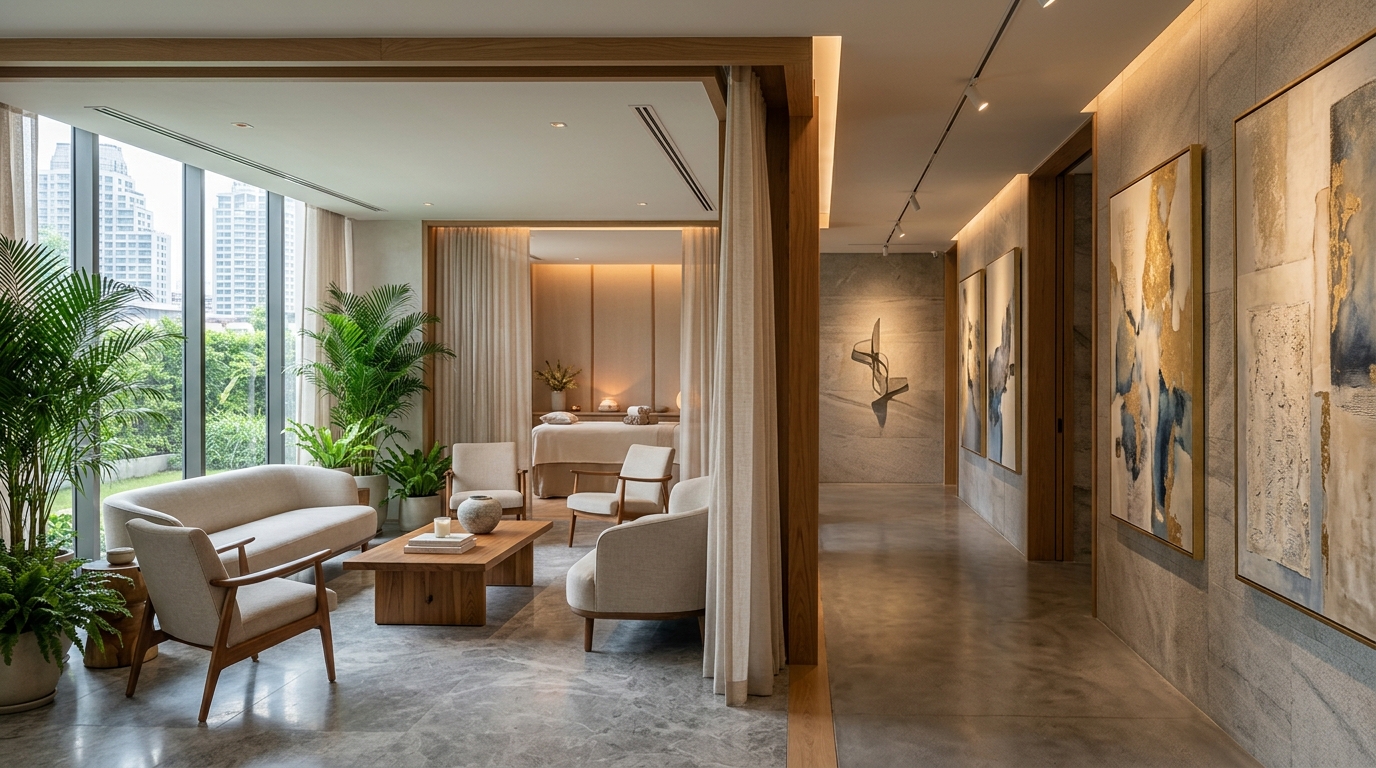
Distraction does not necessarily arise from excess alone. It can also emerge from repetition, inconsistency, or a lack of visual intention.
Imagine a room in which every piece of furniture is sculptural, every wall contains an artwork, every surface displays a collection, and every accessory has a distinctive colour or texture. Individually, these elements may be compelling. Together, they may leave the viewer unsure where to look.
When everything demands attention, nothing receives it fully.
Visual hierarchy provides a solution. An interior benefits from having a primary focus, supported by secondary elements and quieter details. In one room, the focal point might be a large painting. In another, it could be a dramatic window, a sculptural light fitting, or the natural grain of an antique table.
Supporting objects should not disappear entirely. Their purpose is to enrich the experience without continually interrupting it.
One useful approach is to introduce contrast between expressive and restrained elements. A bold contemporary artwork can feel more powerful against an understated wall. An elaborately carved chair may benefit from a simple architectural background. A colourful ceramic piece can become more distinctive when surrounded by muted materials.
The same principle applies to collections. Rather than displaying every acquired piece simultaneously, rotating selected objects can create a changing relationship with familiar possessions. An artwork brought out after several months may appear newly compelling because it is no longer competing with the entire collection.
Curation is not a rejection of abundance. It is the process of deciding how abundance should be experienced.
Materials That Invite Quiet Attention
A quiet interior is not necessarily a colourless one. Its atmosphere may emerge from the subtle differences between materials, the movement of light across a surface, or the contrast between handmade and industrial forms.
Wood, stone, linen, clay, glass, metal, and paper each possess distinctive visual and tactile qualities. Their interaction can create richness without requiring a large number of decorative objects.
A solid timber table may reveal the marks of its making. A linen curtain may soften daylight without blocking it completely. A ceramic vessel may display slight irregularities that distinguish it from a mass-produced equivalent. A brushed metal fitting may introduce a restrained reflection that changes as the light shifts.
Such details encourage a slower form of looking.
Instead of relying on obvious decoration, the room offers experiences that become more apparent through attention. A surface may look plain from a distance but reveal complex grain, delicate tonal variation, or evidence of craftsmanship when approached.
Natural materials can be particularly effective because they often carry traces of time and use. A wooden object may darken with age, stone may develop a patina, and handmade ceramics may preserve the subtle gestures of their maker. These changes can deepen the relationship between an object and its owner.
However, furnishing silence does not require a preference for natural materials or traditional craftsmanship. Industrial objects, polished surfaces, translucent plastics, and contemporary manufactured pieces can also contribute to a thoughtful interior.
What matters is the quality of their interaction. A room becomes visually calmer when its materials feel intentional rather than randomly accumulated.
Light, Shadow, and the Invisible Furniture of a Room
Objects do not exist independently of their environment. Their appearance changes according to the light that surrounds them, the shadows they cast, and the distance from which they are viewed.
Natural light can transform an otherwise simple interior throughout the day. Morning light may reveal the warm undertones of wood, while afternoon light may emphasise the texture of a plaster wall. As daylight fades, the same room acquires a different rhythm.
These changes can become part of the room's composition.
A carefully placed sculpture may cast a long shadow across a wall, effectively creating a second form. A translucent vase may alter the way light passes through it. A painting positioned near a window may appear subtly different at different hours.
When a room is already filled with objects, these visual events can become difficult to notice. Leaving surfaces and walls relatively open allows light to become an expressive element in its own right.
Artificial lighting deserves similar attention. Instead of illuminating everything with equal intensity, layered lighting can establish distinct areas of focus. A reading lamp can create intimacy around a chair, while soft ambient lighting supports the overall atmosphere. A directed light may reveal the texture of a painting or sculpture without turning the entire room into a display.
Light is not simply a practical requirement. It is part of the interior's visual language, capable of giving even a familiar object renewed presence.
The Art of Displaying Art at Home
Living with art differs from encountering it in a gallery. At home, artworks share space with everyday routines, personal possessions, furniture, and the changing circumstances of domestic life.
This makes the selection and placement of art particularly important.
A painting does not always need to occupy the largest wall. A smaller work positioned at an appropriate height may establish a more intimate relationship with the viewer. A sculpture can become a natural part of a room when its scale and position allow people to encounter it comfortably as they move through the space.
The relationship between artwork and architecture also deserves consideration. A strong geometric painting may complement the lines of a doorway or window. An organic sculpture may introduce softness into a room dominated by straight edges. A monochromatic work can establish a pause within a richly coloured interior.
The aim is not to match everything perfectly. Overly coordinated arrangements can feel predictable, while carefully judged contrasts often create more compelling experiences.
Art should also retain some independence from its surroundings. An artwork need not match the sofa, repeat the colours of the curtains, or follow the room's established palette. Its difference may be precisely what makes it valuable.
The challenge is to provide enough space for that difference to be appreciated.
For collectors, this may mean displaying fewer works at a time and rotating pieces according to season, mood, or changing interests. For those beginning an art collection, it may mean choosing a single work that genuinely resonates rather than acquiring several pieces simply to fill empty walls.
A home is not a showroom, and an artwork does not lose its value because it is enjoyed privately. Its significance may deepen through repeated encounters, changing light, and the personal associations that accumulate over time.
Personal Objects and the Weight of Memory
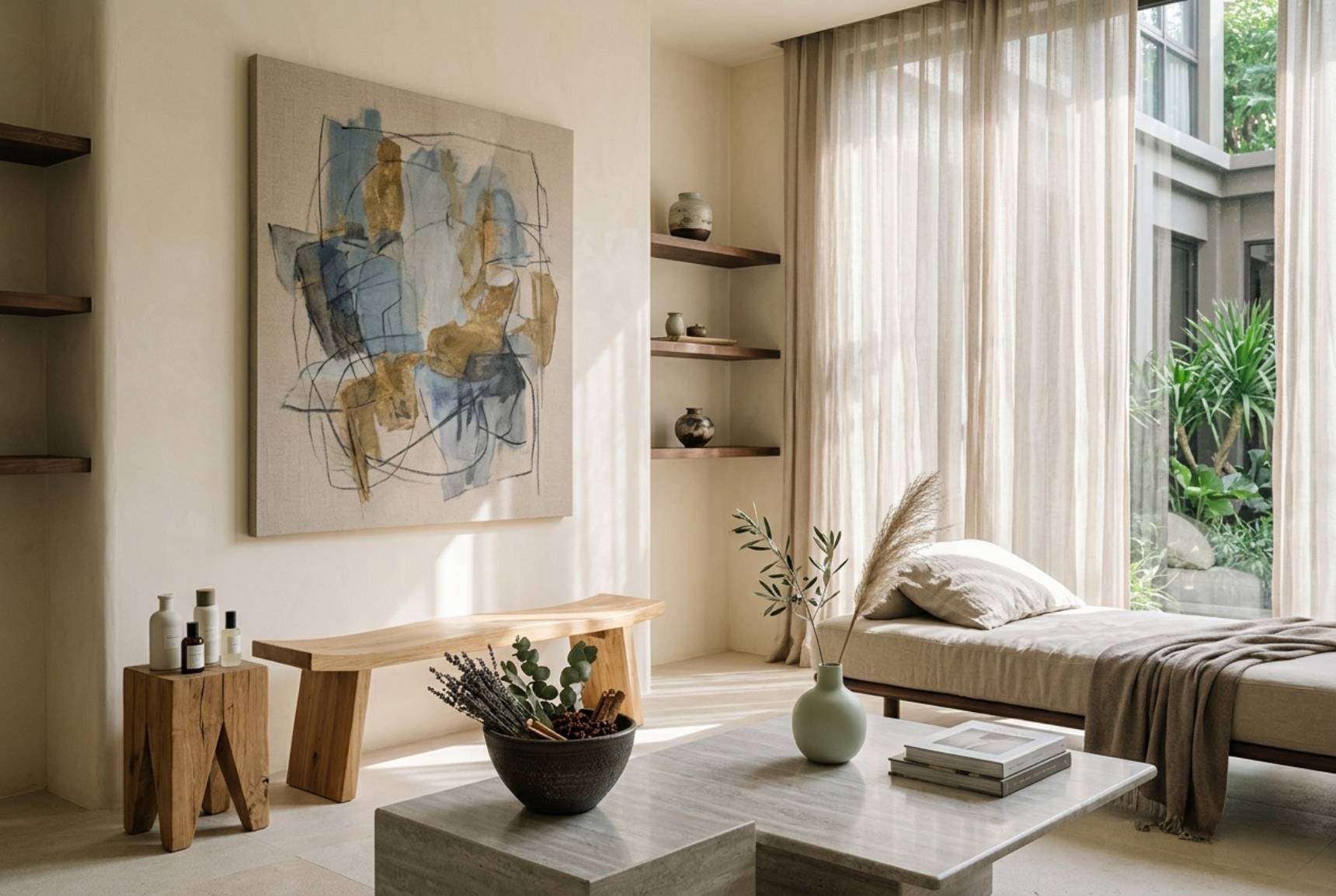
Not every meaningful object needs to be a work of art or a carefully designed piece of furniture. Everyday possessions often carry emotional significance that cannot be measured by their appearance or market value.
A book passed between generations, a small object collected during travel, a handmade bowl, or a photograph from an important moment may contribute more to the character of a home than an entire collection of decorative accessories.
These objects belong because they connect the physical environment with personal experience.
Yet meaningful possessions can also accumulate until their individual stories become difficult to recognise. When every surface is covered with souvenirs and keepsakes, the objects may lose some of the attention that once made them special.
Thoughtful display can help restore that connection.
A small group of travel objects arranged together may tell a coherent story. A treasured photograph placed on a quiet shelf may invite a moment of reflection. A family heirloom can become a focal point when it is given enough space to be noticed without explanation.
This does not require discarding sentimental possessions. Some objects can be stored carefully and revisited later, while others can remain part of daily life. The important distinction is between preserving an object's meaning and feeling obliged to display it constantly.
Personal interiors are most compelling when they reveal something about the people who inhabit them, rather than simply demonstrating their ability to acquire beautiful things.
Cultural Sensitivity and the Meaning of Objects
Objects also carry meanings that extend beyond individual taste. Their forms, materials, symbols, and histories may be connected to specific communities, traditions, spiritual practices, or ways of life.
When incorporating objects from different cultures, thoughtful furnishing requires attention to context as well as appearance.
A handmade textile, traditional vessel, ceremonial object, or contemporary artwork should not be treated merely as a convenient decorative accent if its significance is rooted in a particular cultural history. Understanding its origin, the circumstances of its creation, and the perspective of its maker can lead to a more meaningful relationship with it.
This is especially relevant in interiors that bring together contemporary design and traditional craftsmanship. Rather than using cultural references indiscriminately, designers and collectors can support the artists and craftspeople who create these objects, acknowledge their origins, and consider how they are presented.
In Thailand and across Southeast Asia, craft traditions offer a wide range of materials, techniques, and visual languages. Contemporary interpretations of ceramics, textiles, woodwork, and other forms of making can coexist with modern architecture without reducing cultural identity to a decorative theme.
A considered interior allows these objects to retain their individuality. Their value lies not only in how well they fit a particular room but also in the knowledge, labour, and cultural experience they embody.
Furnishing silence, in this sense, is not about stripping a space of identity. It is about making room for objects to be understood on their own terms.
The Importance of Empty Space in Contemporary Living
Modern life often encourages continuous accumulation. New products, changing trends, digital images, and the pressure to improve our surroundings can make an interior feel permanently unfinished.
There is always another object to acquire, another corner to decorate, or another visual trend to incorporate.
Empty space offers a different possibility.
An unoccupied wall can allow the architecture to become visible. A clear tabletop can support everyday activities without requiring constant rearrangement. An open corner can provide room for movement, natural light, or a future object that genuinely deserves to be there.
These spaces are not necessarily incomplete. They can represent deliberate decisions.
The psychological experience of visual simplicity varies from person to person, and a richly layered environment may be deeply comforting to someone who values collections, colour, and ornament. Nevertheless, giving certain areas room to remain open can help establish a more balanced relationship between activity and rest.
The goal is not to impose silence everywhere. It is to create variation.
A room may contain a dense collection of books, a colourful artwork, and richly textured furniture while still benefiting from one relatively quiet wall or an uncluttered area near a window. This contrast allows the more expressive elements to become meaningful.
Empty space is most effective when it has a purpose within the larger composition. It creates rhythm, supports movement, and gives the eye an opportunity to pause.
A Practical Guide to Furnishing Silence
The principles of thoughtful furnishing can be applied gradually, without replacing furniture or undertaking a complete redesign.
Begin by observing the room. Before purchasing anything new, spend time noticing where the eye naturally travels, which areas feel crowded, and which features deserve greater attention. Consider the room's architecture, daylight, circulation, and everyday uses.
Identify the focal point. Decide whether a particular artwork, window, architectural feature, or piece of furniture should anchor the composition. Allow supporting elements to reinforce that focus rather than compete with it.
Edit surfaces selectively. Remove objects temporarily from shelves, side tables, and countertops. Return only those that contribute to function, memory, texture, or visual balance. There is no need to eliminate everything that is decorative.
Experiment with spacing. Move artworks slightly farther apart, allow a sculpture more room, or leave part of a shelf unoccupied. Small adjustments can change the way objects are perceived without requiring new purchases.
Balance materials and forms. Look for relationships between smooth and textured surfaces, rounded and angular shapes, heavy and delicate objects, or warm and cool tones. Contrast can create interest, while repetition can establish coherence.
Consider movement. An interior should support the way people walk, sit, read, work, and gather. Objects that interrupt circulation or make everyday activities unnecessarily difficult may not belong in their current positions, regardless of their beauty.
Live with the arrangement. Interior design does not always need to be resolved immediately. Allow yourself time to experience the room at different hours and in different circumstances. An arrangement that looks impressive in a photograph may feel less comfortable in daily life.
Resist automatic replacement. An empty space does not necessarily require a new object. Sometimes, the most useful design decision is to wait until the right piece appears.
Above all, treat these principles as invitations rather than rules. A home should reflect its inhabitants, not conform to an abstract ideal of perfection.
Beyond Trends: Creating an Interior That Lasts
Trends can introduce new ideas, materials, and ways of thinking about domestic space. They can also encourage rapid cycles of acquisition, in which objects become desirable because they are fashionable rather than because they offer lasting value.
Furnishing silence encourages a slower approach.
Objects selected for their craftsmanship, usefulness, personal significance, or artistic character are less dependent on immediate trends. Their relationship with a room can evolve as the inhabitants' tastes and circumstances change.
An antique table may sit comfortably beside contemporary lighting. A modern sculpture may bring new energy to a traditional interior. A handmade ceramic vessel may remain compelling long after the colour or shape it represents has moved out of fashion.
These combinations demonstrate that coherence does not require uniformity. A lasting interior can contain different periods, influences, and styles when the relationships between them have been considered carefully.
Sustainability also enters the discussion. Reusing existing furniture, repairing well-made objects, supporting independent craftspeople, and purchasing less frequently can reduce unnecessary consumption. These choices may also create interiors with greater individuality, shaped by accumulated experience rather than short-lived trends.
A room that develops gradually often tells a richer story than one assembled all at once.
The most enduring interiors are not necessarily the most expensive or visually dramatic. They are spaces in which objects continue to offer pleasure, usefulness, and meaning over time.
Conclusion: Making Room for What Matters
Furnishing silence is ultimately an exercise in attention. It asks us to look beyond the immediate appeal of individual objects and consider the relationships that make a space feel complete.
Some objects belong because they serve a practical purpose. Others bring beauty, memory, cultural significance, or a sense of discovery. Some earn their place through the way they respond to light, architecture, and surrounding materials. Others may be valuable in themselves but more compelling when displayed elsewhere, stored carefully, or allowed to remain outside the composition.
The decision is rarely absolute. Interiors change, collections grow, and the meaning of familiar possessions evolves. What feels essential today may become distracting tomorrow, while an overlooked object may gradually reveal a new significance.
The art lies in remaining attentive to these changes.
A well-considered room does not demand that every object speak at once. It establishes a rhythm in which certain things come forward while others recede. It recognises that a painting needs a wall, a sculpture needs space, a collection needs structure, and everyday life needs room to unfold.
Silence, in this context, is not an absence of character. It is the condition that allows character to emerge.
Perhaps the most important question when furnishing a space is not what can be added, but what deserves to remain. When every object has a reason for being there, the room becomes more than an arrangement of furniture and decoration. It becomes an expression of attention, intention, and the quiet art of living well.